
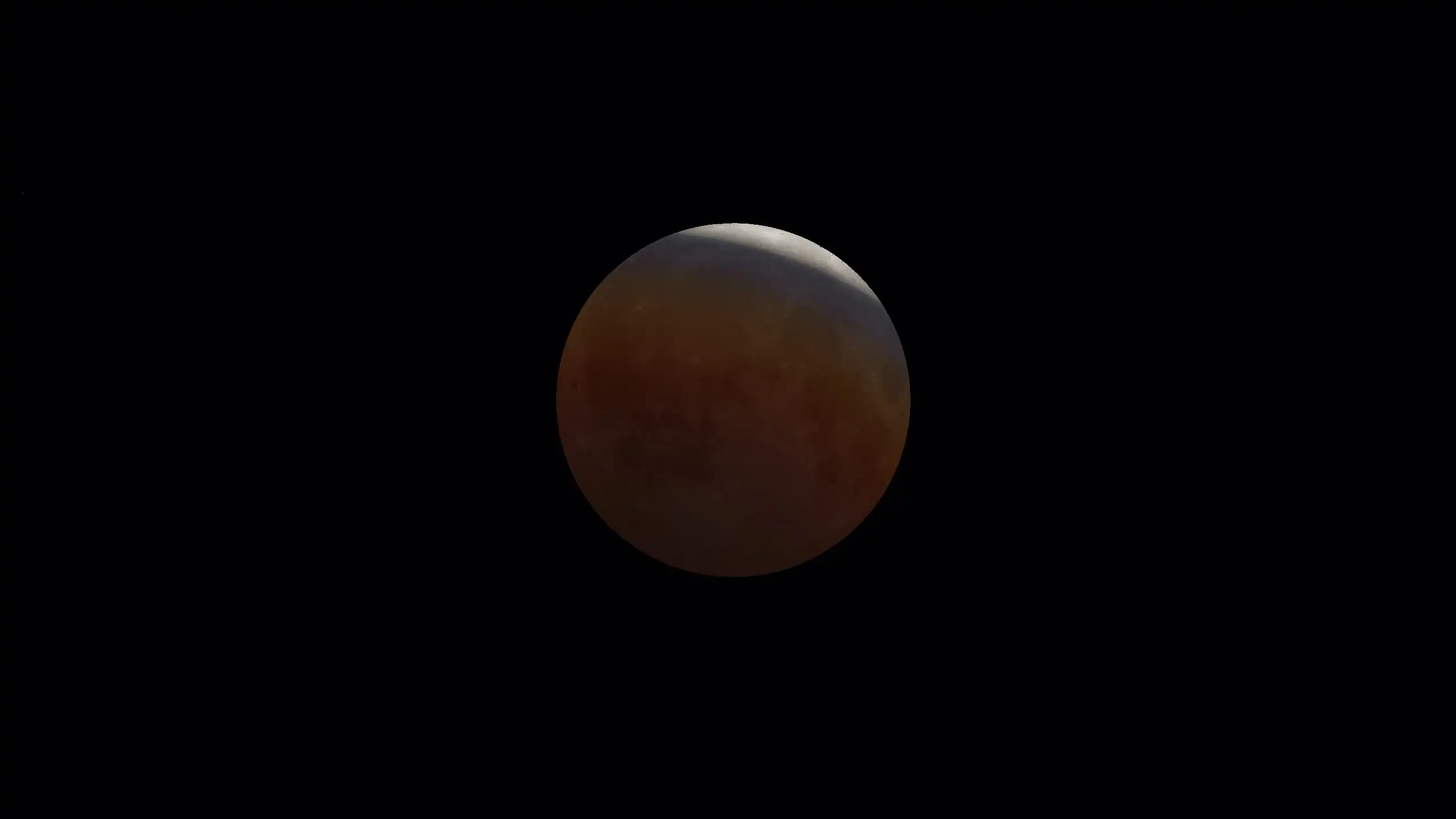
The above photo is a simulation of what the moon may look like at mid-eclipse Thursday night. Courtesy of Stellarium.
Thursday night, a partial lunar eclipse:
What’s happening? Thursday night, the Moon will slip into Earth’s shadow. Instead of disappearing, though, it will take on a warm, orangish color.
Unlike the total lunar eclipse we saw in March, this is a partial lunar eclipse, meaning only part of the Moon will move into Earth’s darker shadow.
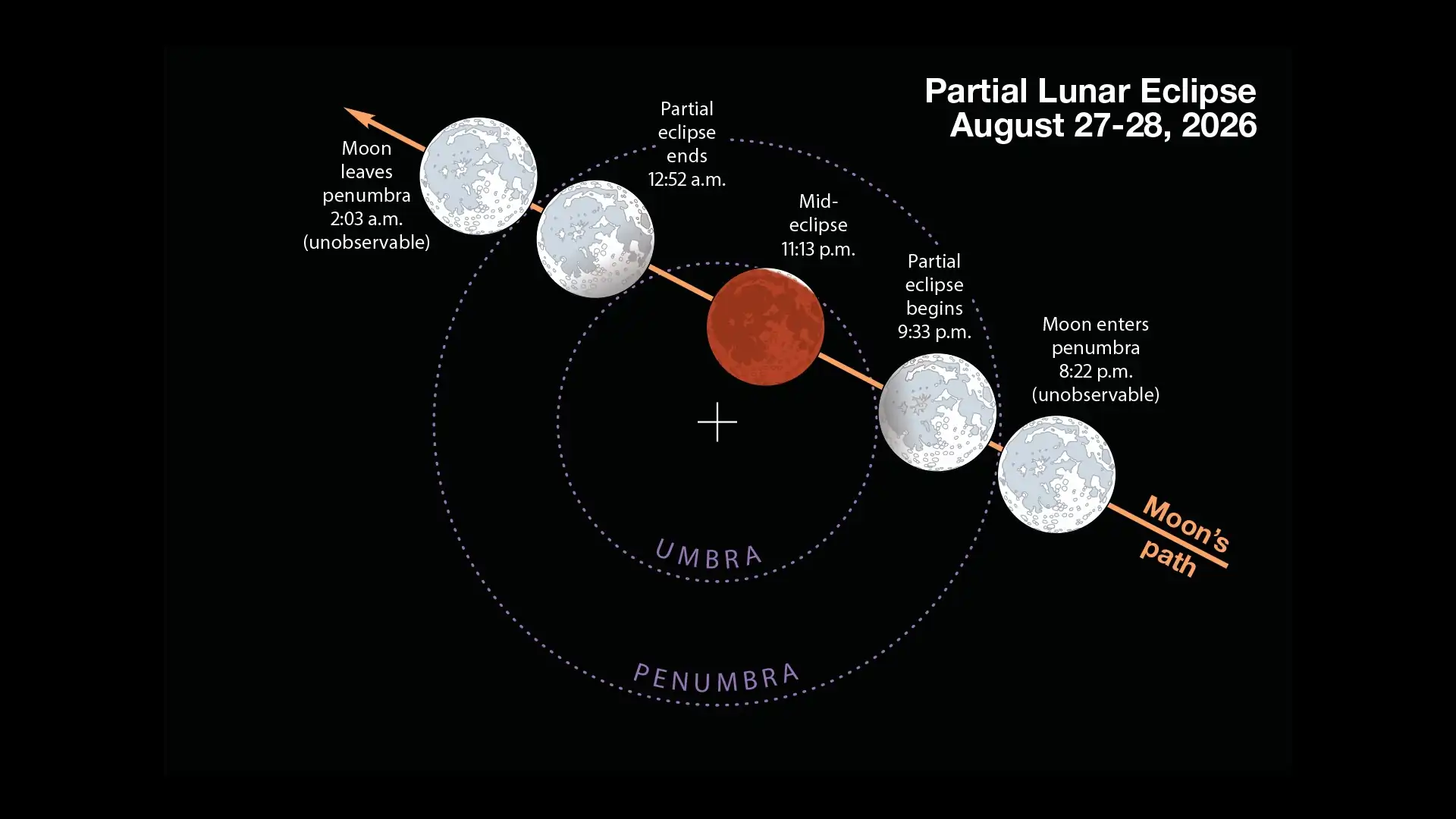
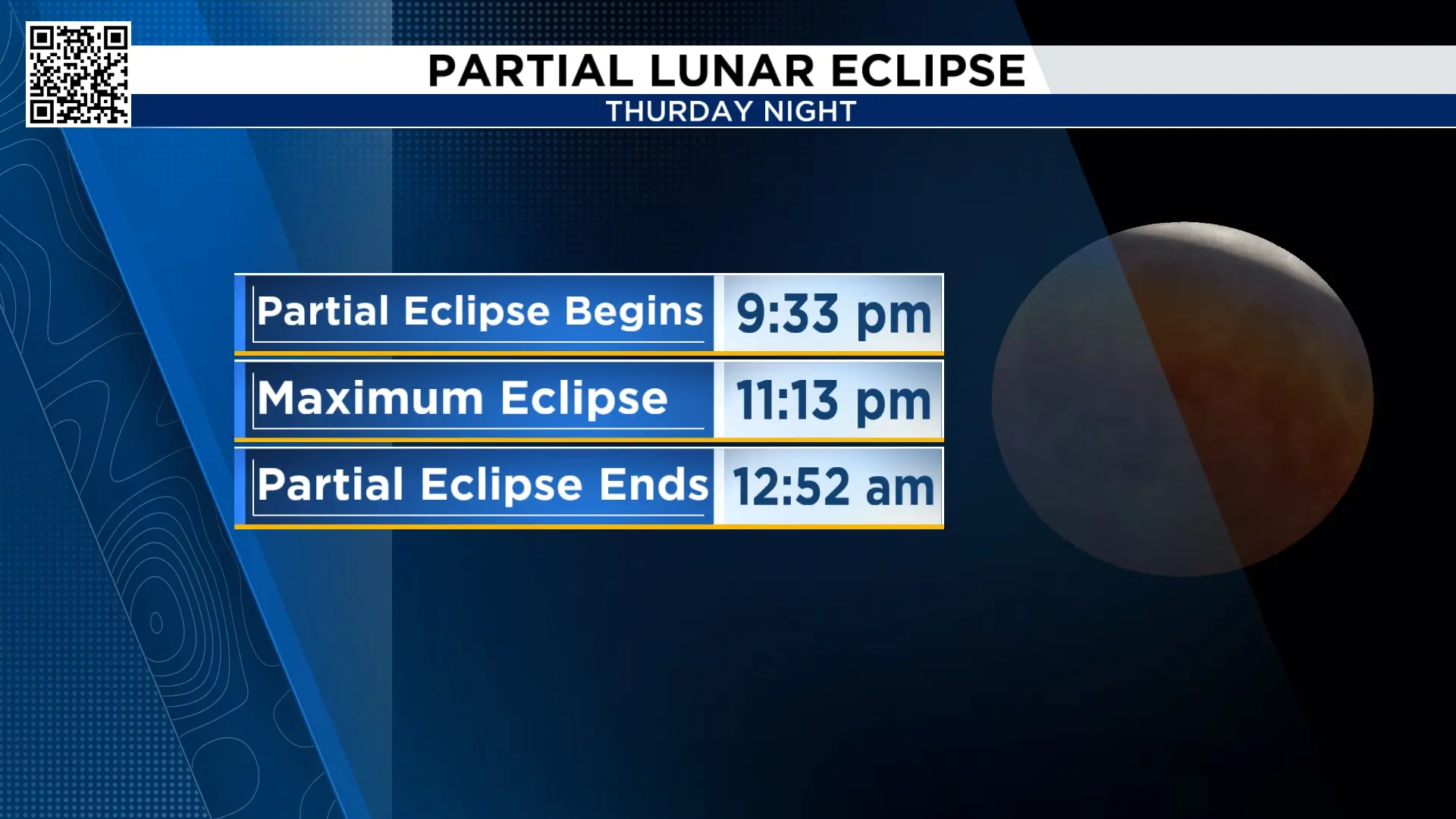
Here in Houston (central time,) the partial eclipse begins at 9:33 p.m. Before that, you may notice the Moon gradually darkening as it moves into Earth’s penumbra, a term that comes from Latin and means “almost shadow.”
That subtle penumbral darkening begins about 30 minutes before the partial phase and can linger for about 30 minutes after the partial eclipse ends. In all, the Moon will be in some phase of the eclipse for nearly three hours.
Mid-eclipse: 11:13 p.m. Partial eclipse ends: 12:52 a.m.
So, before you head to bed after watching KPRC 2 News, look up. You may catch the Moon putting on a celestial show.
See the timing graphics below for when to watch across Texas.
Partial vs. total lunar eclipse:
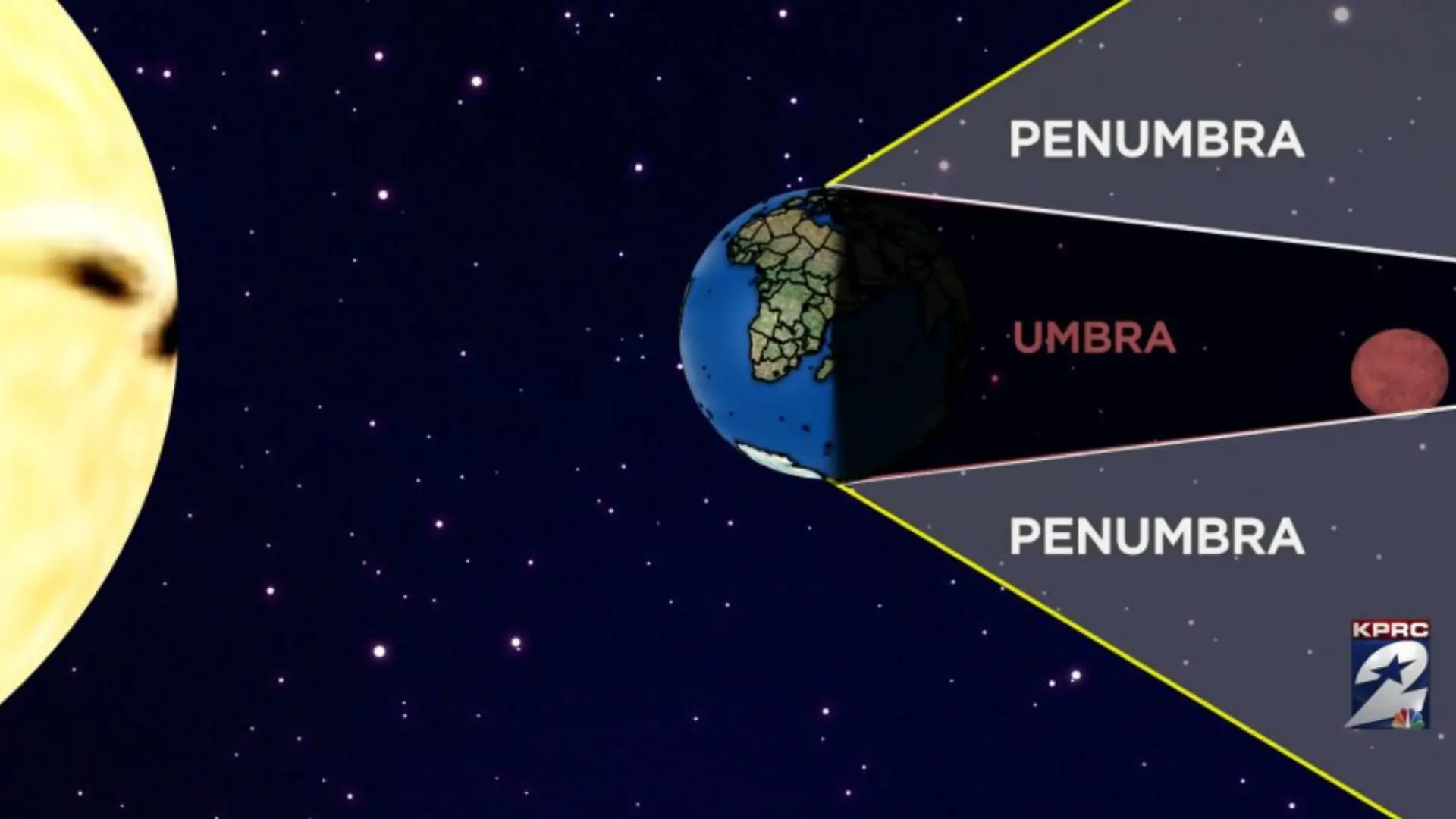
To be clear, this is not a total lunar eclipse, or “blood moon.” During a total lunar eclipse, the Moon passes completely into Earth’s umbra, the darkest part of our planet’s shadow. Umbra is Latin for “shadow.” When the Moon is fully within the umbra, direct sunlight is blocked, and the Moon can take on a reddish color.
This eclipse is partial, meaning the Moon does not completely enter Earth’s umbra. But it comes remarkably close to being total.
There are two ways astronomers describe how much of the Moon is covered by Earth’s umbra.
The first is magnitude, which measures the fraction of the Moon’s diameter covered by the umbra. For this eclipse, the magnitude is 0.93, or 93%.
The second is obscuration, which measures the percentage of the Moon’s surface area covered by the umbra. In this case, 96% of the Moon’s surface will be obscured.
So while it’s technically a partial lunar eclipse, it’s a very deep partial eclipse, just shy of totality.
Why does the moon turn orange?
As sunlight passes through Earth’s atmosphere, it gets filtered along the way. The shorter blue and purple wavelengths are scattered, while more of the orange light makes it through. That filtered light reaches the Moon, giving it an orangish glow during the eclipse Thursday night.
Exactly how orange the Moon looks can vary from one eclipse to another. Two factors make the biggest difference: how cloudy the Earth’s atmosphere is Thursday and how much volcanic dust is suspended high in the stratosphere. Both can affect how much orange light reaches the Moon.
How to view the lunar eclipse:
Watching the lunar eclipse is about as easy as it gets: be awake and look up. You don’t need any special equipment or an app to enjoy it.
Some dedicated photographers will be outside capturing the entire event with time-lapse cameras, but you certainly don’t need to stay up for all three hours.
If you can only step outside once, make it 11:13 p.m. That’s the midpoint of the eclipse, when the Moon will be deepest in Earth’s shadow. Look toward the west.
Have binoculars or a telescope? Even better. They can make the view more detailed and dramatic, but they’re completely optional. The eclipse will still be worth a look with nothing more than your own eyes.
Thursday night’s forecast:
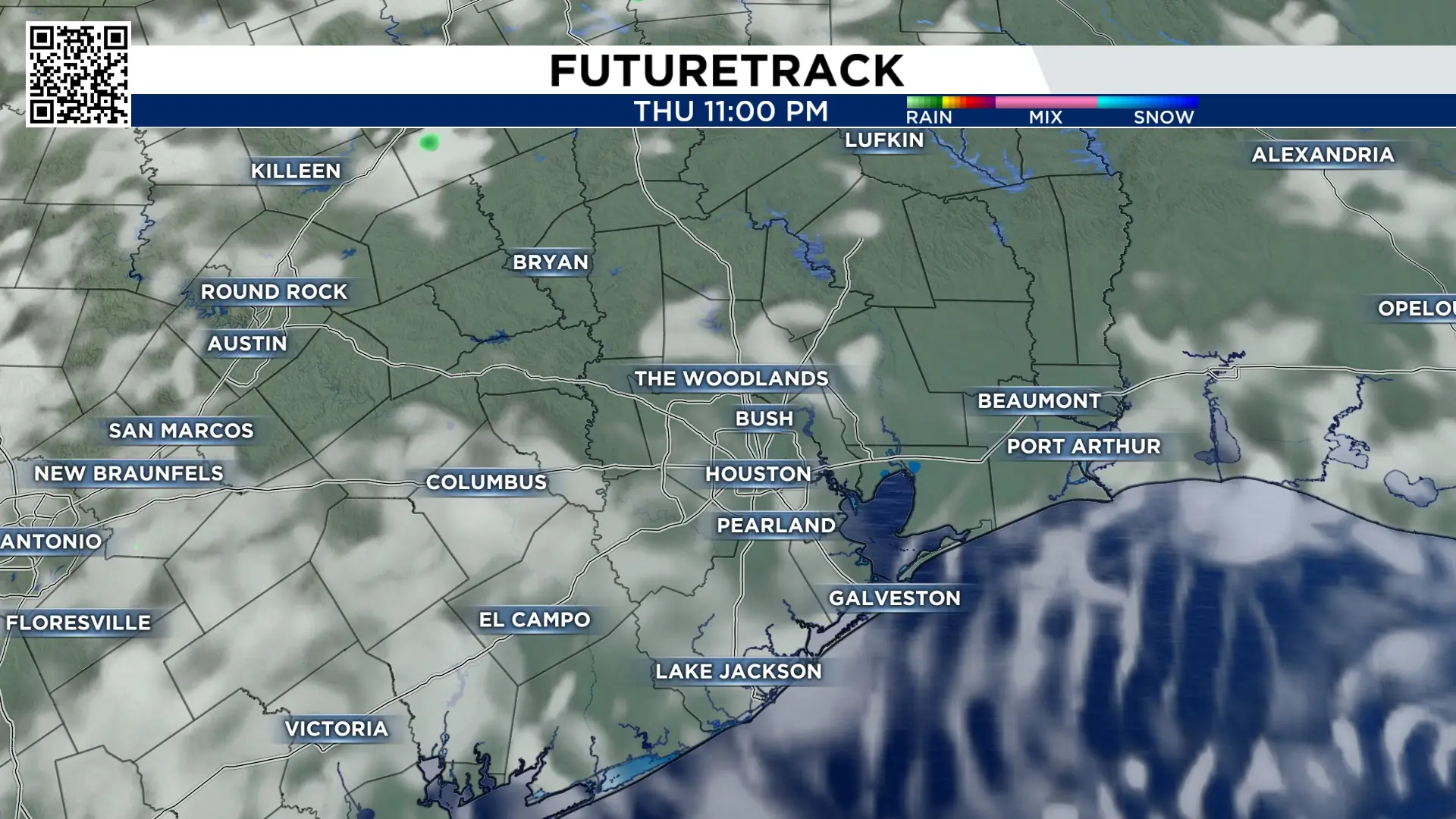
Timing may work out perfectly for us in southeast Texas. There is a 40% chance of storms Thursday afternoon. By the time we get to Thursday night skies will start to clear leaving behind partly to mostly clear skies. I’ll keep you posted if there are changes.
I you snap a great photo, send it our way at click2pins.com. The image you see here was shared with us after the November 8, 2022, total lunar eclipse and we’d love to see what you capture this time.

One final note:
As the Moon slips into Earth’s shadow, there’s a subtle but amazing detail you can actually see: the curve of our planet projected onto the lunar surface.
Ancient Greek astronomers noticed this more than 2,000 years ago and recognized it as evidence that Earth is spherical. During a lunar eclipse, Earth’s shadow on the Moon is always curved, a shape consistent with a round planet.
It’s a beautiful reminder that the night sky isn’t just putting on a show. Sometimes, it’s also giving us a glimpse of the same evidence that helped people understand the shape of our planet centuries ago.
And if you’re hoping for a true “blood moon” total lunar eclipse, you’ll have to wait a little while. The next total lunar eclipse visible from the United States won’t arrive until June 26, 2029.

More Stories Like This In Our Email Newsletter
